

The advisory work Rob Dunie does with founders and teams is grounded in ongoing research into how complex systems get governed — whether those systems are built from people, software, or AI agents. Here’s where that thinking gets published.
Venutian Antfarm
Venutian Antfarm is an open-source framework for structured multi-agent software delivery. It formalizes governance patterns drawn from enterprise architecture and agile delivery — a Leadership Triad of Product Owner, Solution Architect, and Scrum Master agents that don’t command execution but enrich the context in which decisions get made. The framework includes progressive autonomy controls, evidence-based pace management, and a compliance floor that activates before any code ships.
The same separation-of-concerns thinking that structures this framework — who owns business value, who owns technical coherence, who owns process health — is the lens Rob brings to messy product and systems decisions with clients.
GitHub: github.com/rdunie/venutian-antfarm License: AGPL 3.0 (with app-layer exemption) + commercial
Published in Towards AI
Governing the Ant Farm: A Governance-First Framework for Multi-Agent Software Delivery
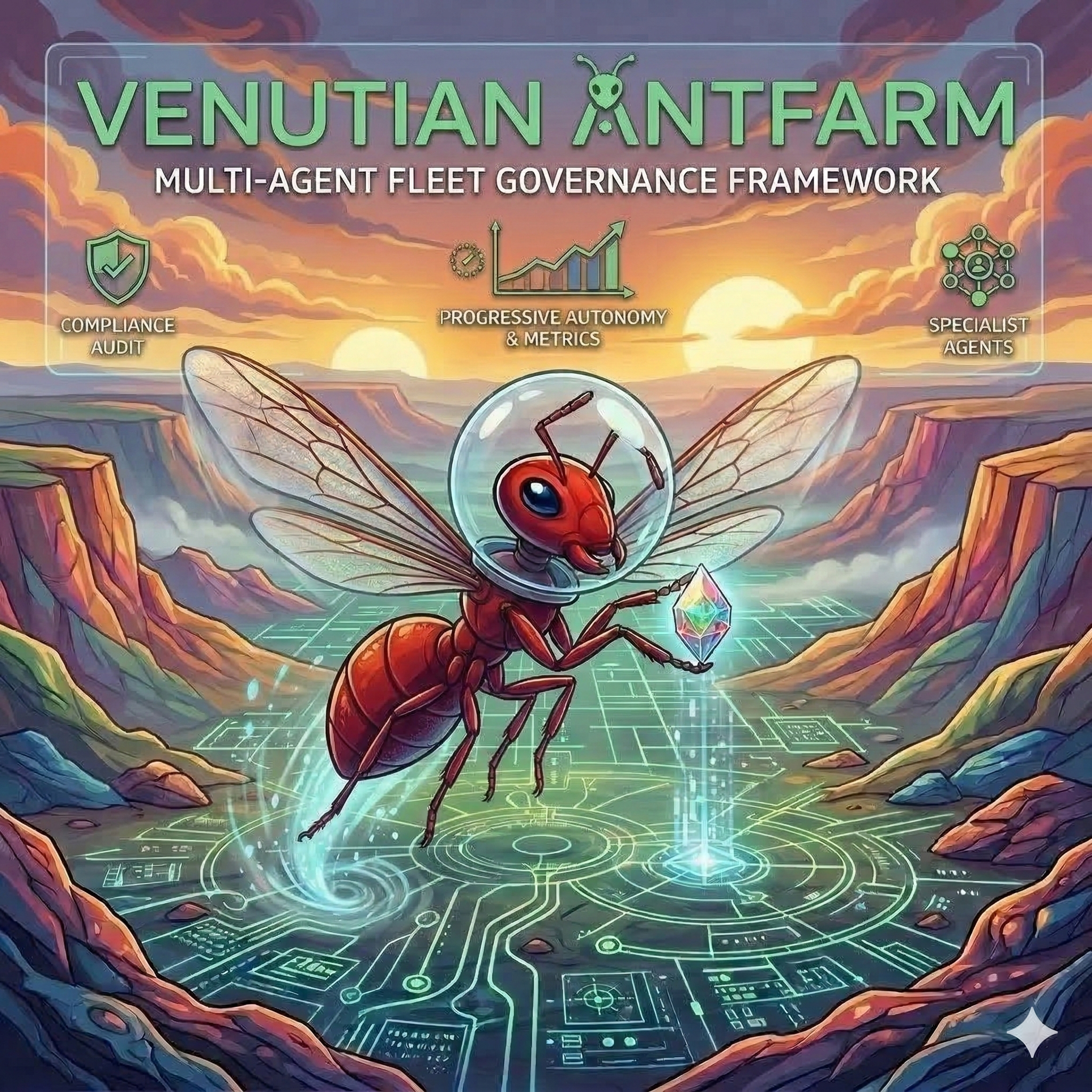
How the Dynamic OODA loop, release train engineering, and structured learning loops converge in a practical harness for AI agent fleets. This article walks through the architecture and governance philosophy behind Venutian Antfarm — why governance has to be structural, not bolted on.
Building Governance for AI Agents Exposes Fractures in How We Govern Today
Explores how the governance challenges in multi-agent systems — separation of concerns, automated controls, forward-looking assessment — mirror unresolved coordination problems in human organizations. If your SOX auditor can’t get the same traceability from your human processes that this framework gets from agents, that’s worth examining.
Building or evaluating multi-agent systems?
If you’re experimenting with multi-agent delivery systems and running into governance questions, the framework is open source and actively looking for production feedback. Reach out or open an issue on the repo.


